V16 Training · Imports and Landed Cost · Lesson 2 of 6
Exchange rates, gains and losses
This lesson follows one euro invoice and a part payment at a later exchange rate, and shows where Parsimony books the difference as an exchange gain or loss.
Written guide
The idea
A supplier invoice in euros is booked in dollars at the exchange rate of its day. A payment is booked at the rate of the payment day. When the two rates differ, the dollars paid differ from the dollars owed, and that difference goes to its own account. The screens use example data; the rates are examples, not market rates.
Step by step
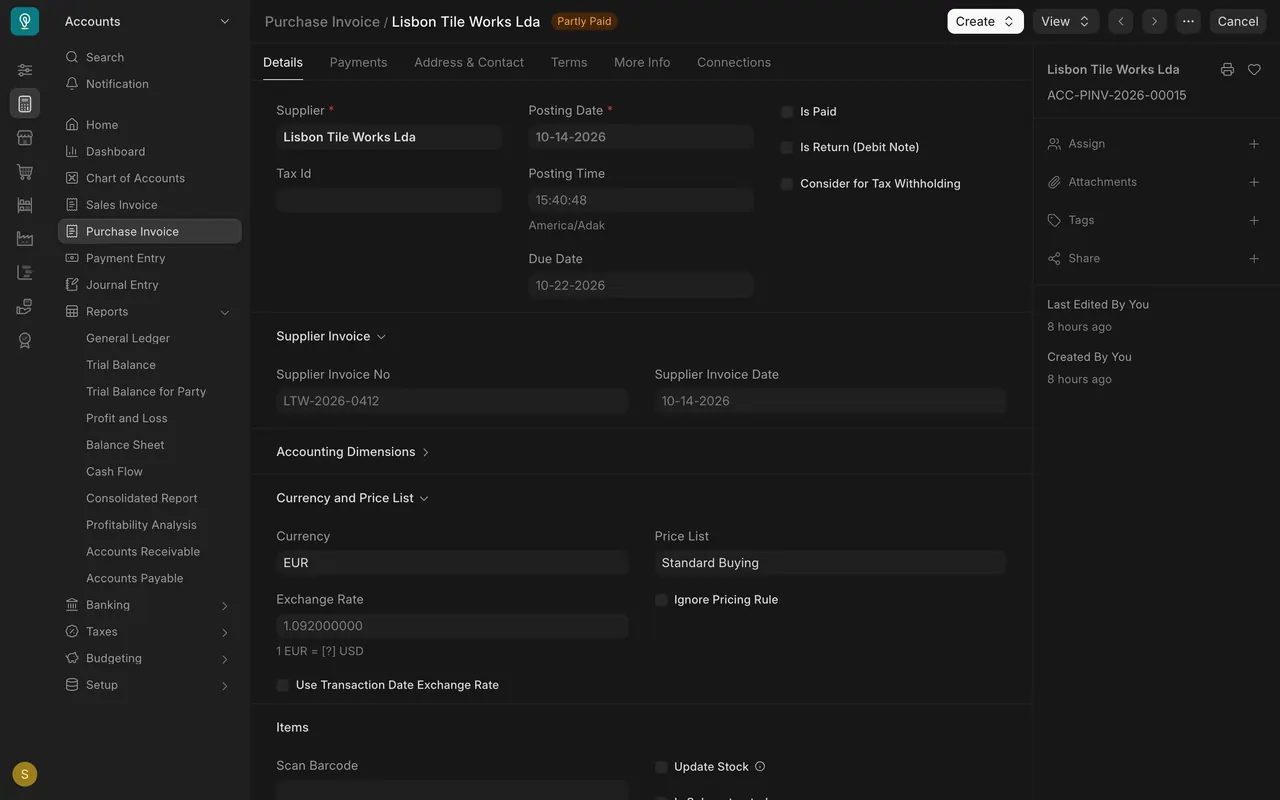
Step 1. Open the purchase invoice
In this example it is from Lisbon Tile Works, dated October 14. Currency is euros, Exchange Rate is 1.092, and the status is Partly Paid.
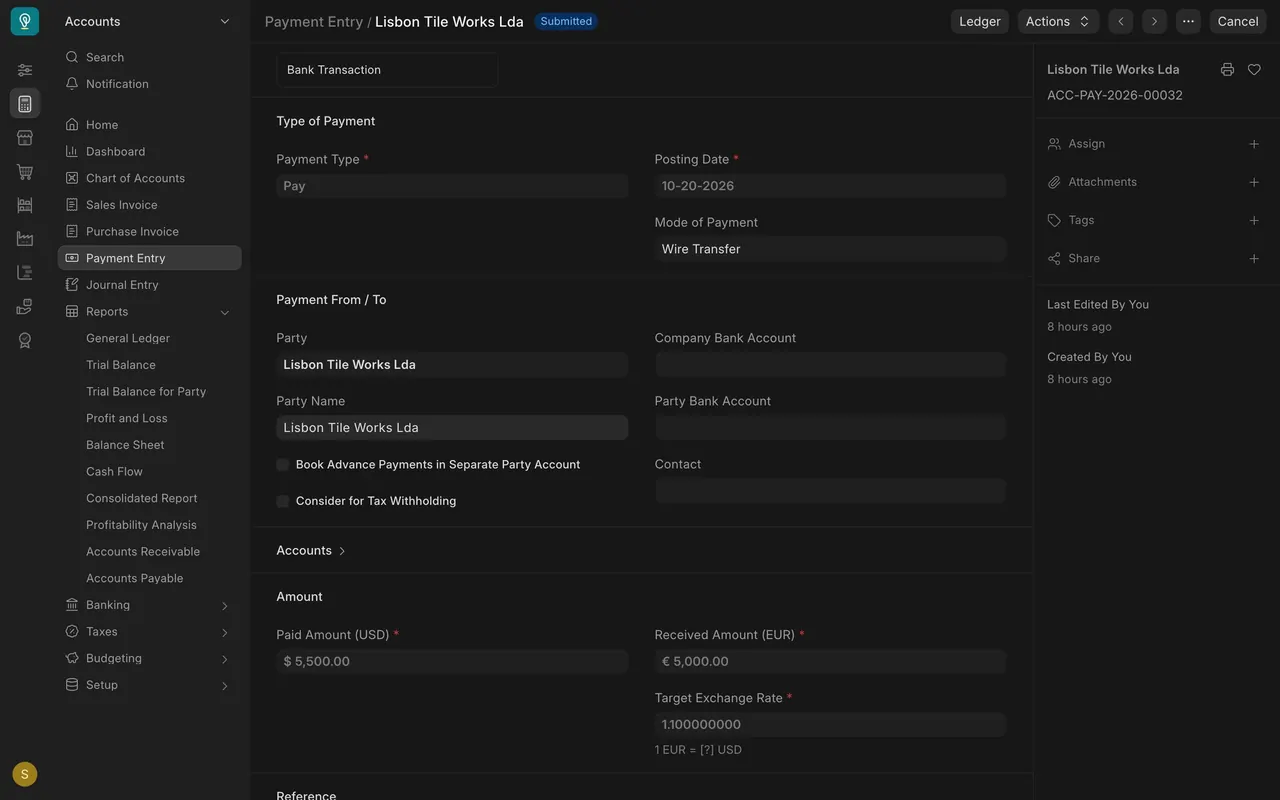
Step 2. Open the payment
Dated October 20: paid amount $5,500.00, received amount 5,000.00 euros, Target Exchange Rate 1.10. Five thousand euros at 1.092 is $5,460.00, so the payment cost $40.00 more.
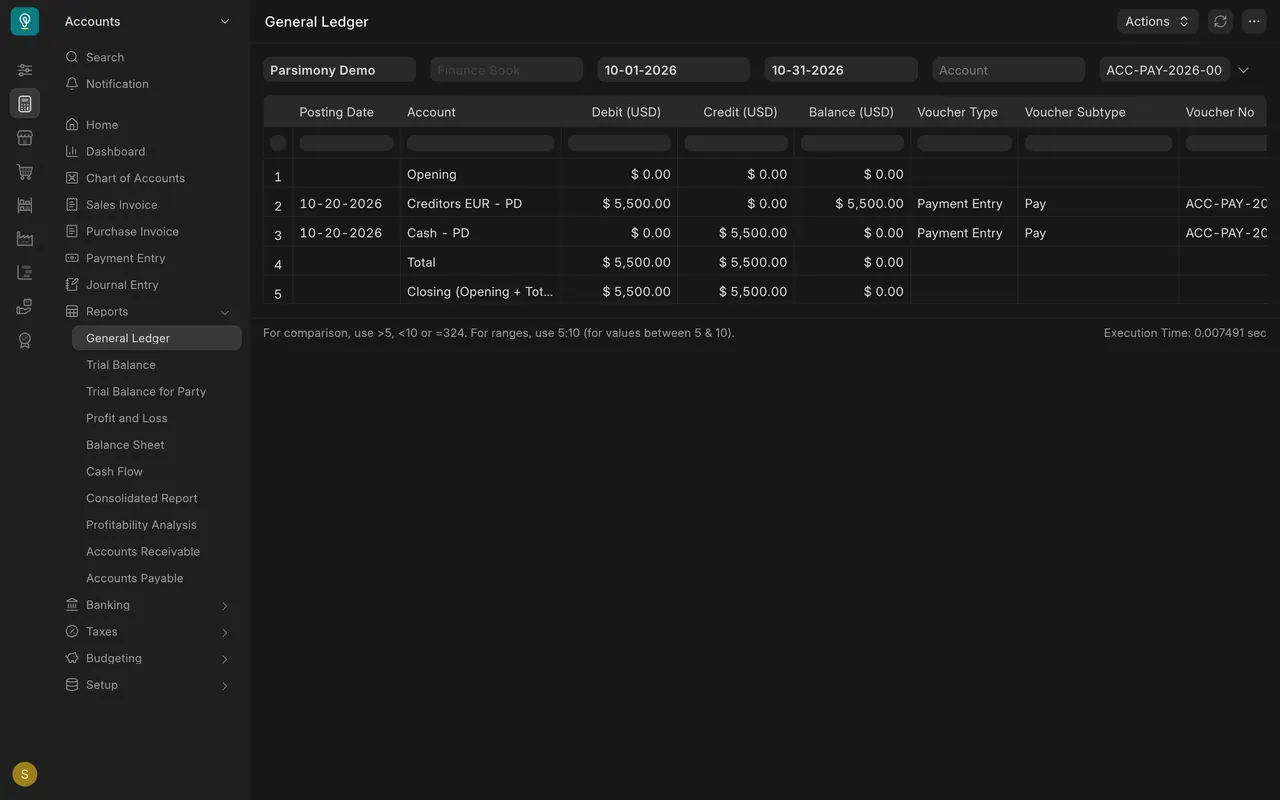
Step 3. Read the General Ledger for the payment
Under Reports, open General Ledger and filter by the payment. It takes $5,500.00 off Creditors EUR - PD and pays it out of the cash account. The difference is booked separately.
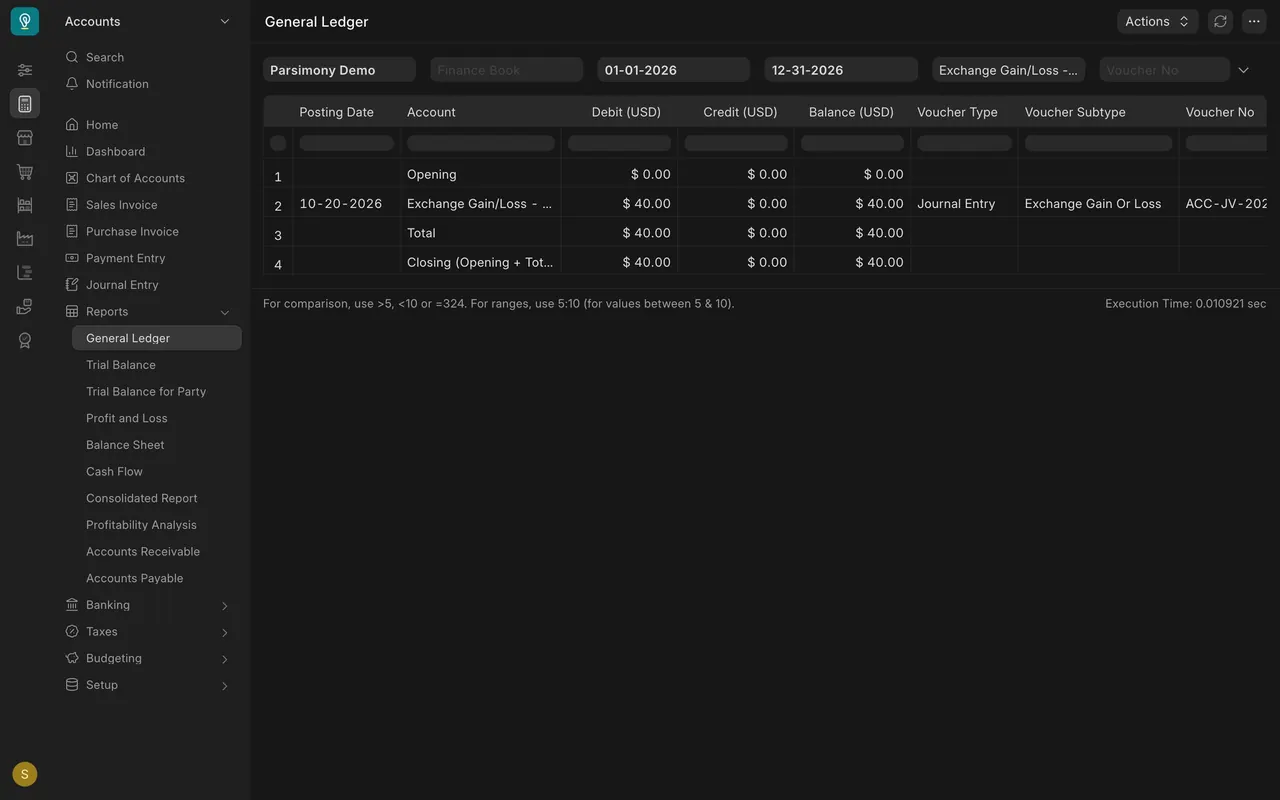
Step 4. Filter by the exchange gain and loss account
One line: $40.00 on the debit side, journal entry, subtype Exchange Gain Or Loss. A debit here is a loss; a lower payment rate would give a gain.
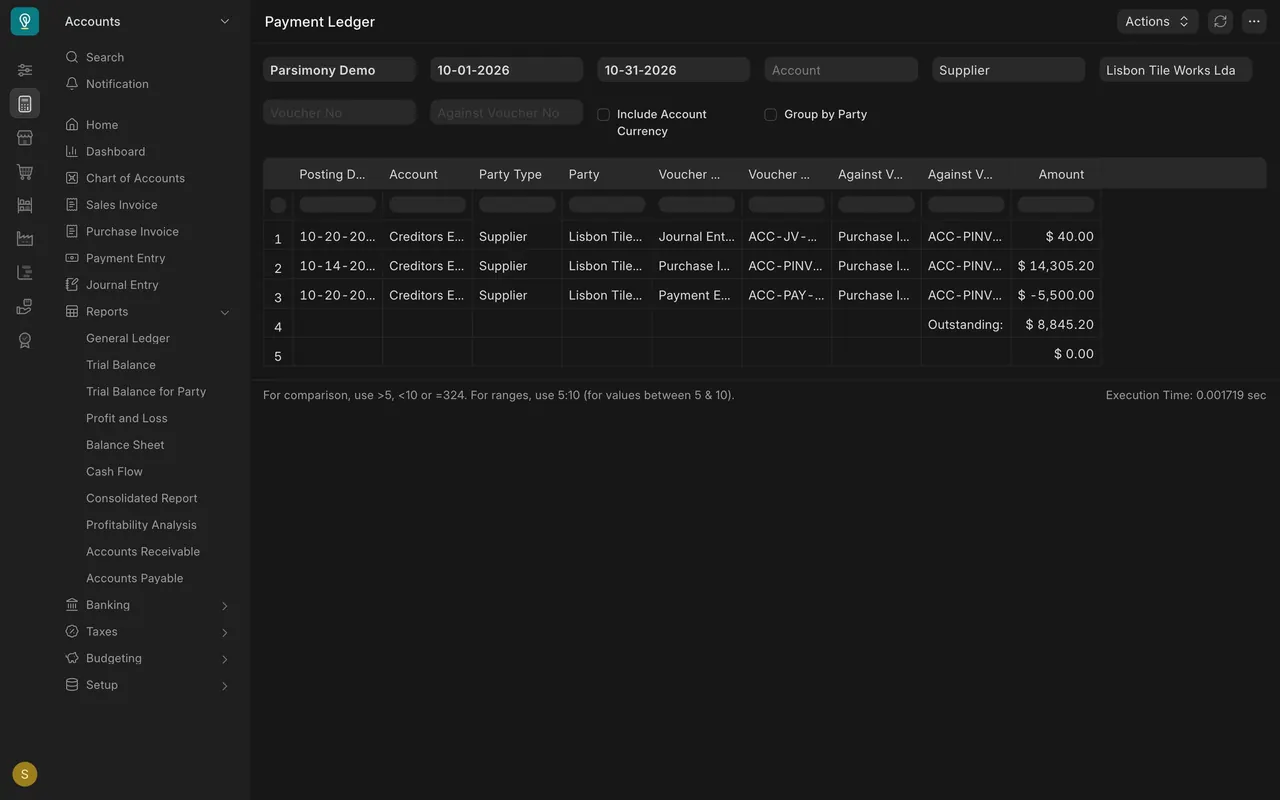
Step 5. Open the Payment Ledger
Filter by the supplier. It lists the invoice ($14,305.20), the payment (-$5,500.00), the difference (+$40.00) and Outstanding $8,845.20, the remaining euros at the invoice rate.
What you may see on your own site
- Your accounts, currencies and rates are your own. Ask your accounts team which account holds exchange differences.
Common mistakes
- Treating example rates as market rates.
- Looking for the difference inside the payment's own ledger lines. It is booked on its own journal entry.
- Reading a debit on the gain and loss account as a gain. A debit there is a loss.
Check yourself
3 quick questions.
1. The invoice rate is 1.092 and the payment rate is 1.10. You pay 5,000 euros. What is the exchange difference?
2. Where does Parsimony book the difference?
3. Which report lists the invoice, the payment and the difference together, with what is still owed?